
The Catalyst for Change
During our recent technical review meeting, our team identified several critical factors that prompted this migration. The most compelling was DeepSeek's remarkable cost efficiency - being 96.4% more affordable than traditional models while maintaining superior performance metrics. For a startup focused on making legal AI accessible, this was a game-changing discovery.
Comparison of DeepSeek R1 and OpenAI o1
DeepSeek R1 and OpenAI o1 are two advanced AI models designed for complex reasoning tasks, including mathematics, coding, and general knowledge. Below is a detailed comparison of their features, performance benchmarks, pricing, and other relevant aspects.
Model Overview
DeepSeek R1: Developed by the Chinese AI lab DeepSeek, this model utilizes a Mixture-of-Experts (MoE) architecture, allowing it to activate only a subset of its parameters for each token processed. It is open-source under the MIT license, enabling developers to modify and commercialize the model without restrictions.
OpenAI o1: This model series includes two versions—o1-preview and o1-mini. It focuses on enhancing reasoning capabilities through a structured approach to problem-solving. The o1 models are proprietary and accessible via OpenAI's API.
Performance Benchmarks
Both models have been evaluated across various benchmarks:
| Benchmark | DeepSeek R1 | OpenAI o1 |
|---|---|---|
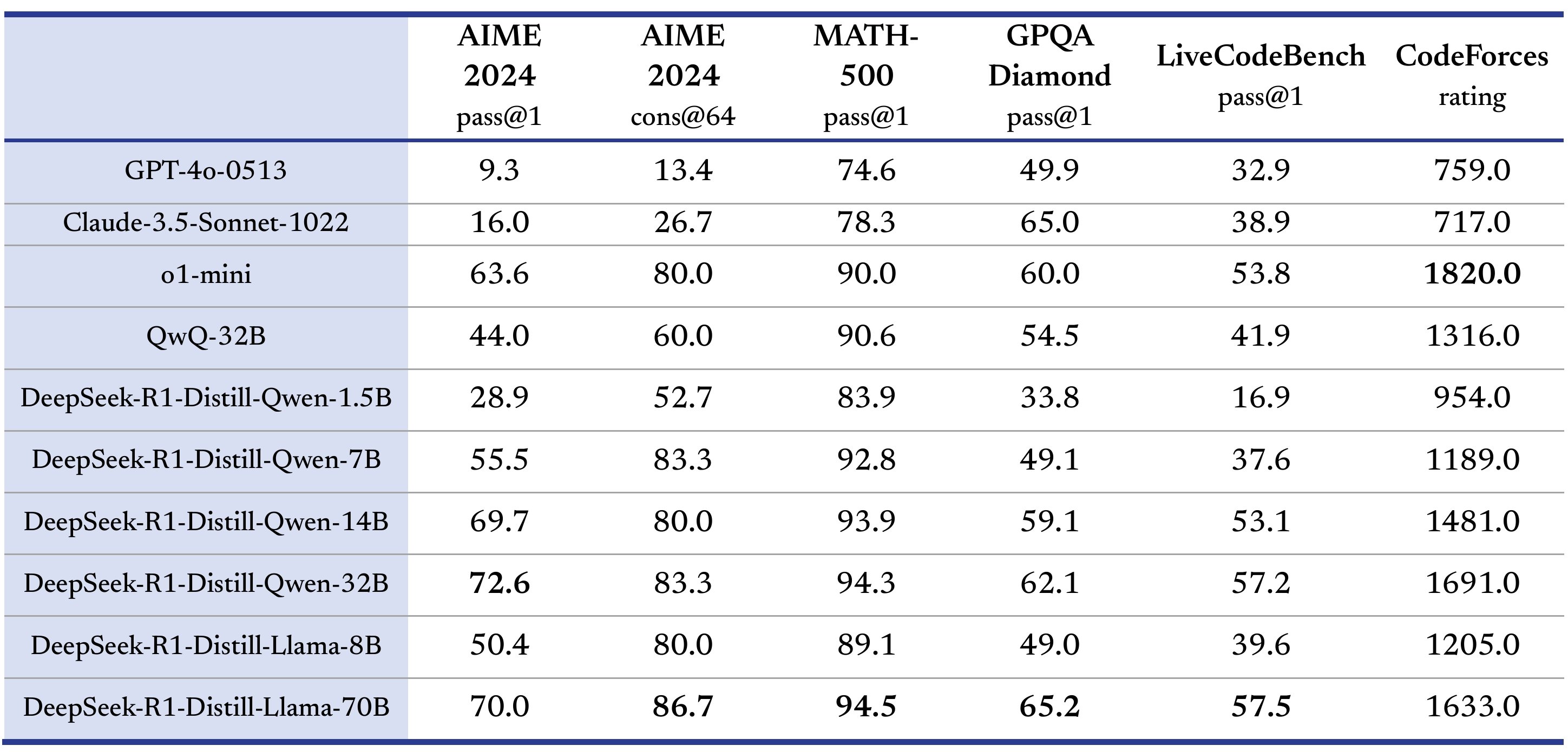
| Mathematical Reasoning | 91.6% on MATH benchmark | 83% on AIME |
| Coding Challenges | 96.3rd percentile on Codeforces | 89th percentile on Codeforces |
| General Knowledge | 90.8% on MMLU | Not specified |
| Logical Reasoning | Strong chain-of-thought reasoning | Advanced but less transparent |
DeepSeek R1 has shown superior performance in mathematical reasoning and coding challenges compared to OpenAI o1, particularly excelling in the MATH benchmark and achieving a higher ranking on competitive coding platforms.
Pricing Structure
The pricing for using these models varies significantly:
DeepSeek R1 Pricing
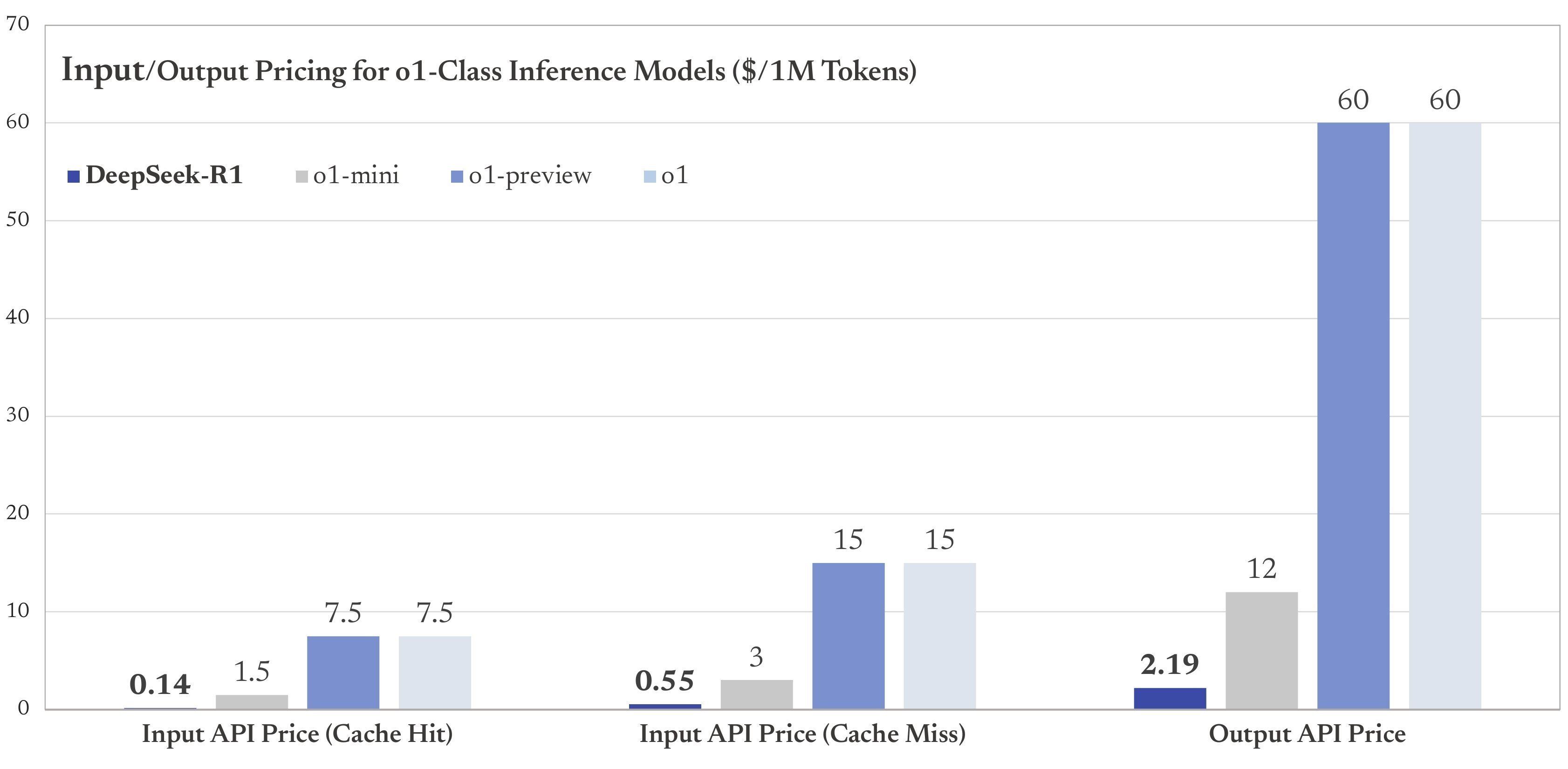
- Input Tokens (Cache Miss): $0.55 per million tokens
- Input Tokens (Cache Hit): $0.14 per million tokens
- Output Tokens: $2.19 per million tokens
- Caching Mechanism: Offers up to 90% cost savings for repeated queries
OpenAI o1 Pricing
- Input Tokens (Cache Miss): $15 per million tokens
- Input Tokens (Cache Hit): $7.5 per million tokens
- Output Tokens: $60 per million tokens
Technical Specifications
| Feature | DeepSeek R1 | OpenAI o1 |
|---|---|---|
| Total Parameters | 671 billion | 1.7 trillion |
| Active Parameters per Token | 37 billion | 444 billion |
| Context Length | Up to 128K tokens | 128,000 tokens |
| Training Data | Trained on 14.8 trillion tokens | Not specified |
Key Features
DeepSeek R1
- Open-source under MIT license
- Advanced chain-of-thought reasoning capabilities
- Efficient caching system for cost-effective usage
OpenAI o1
- Proprietary model with advanced reasoning capabilities
- Two versions tailored for different use cases (o1-preview and o1-mini)
The open-source nature of DeepSeek R1 provides developers with greater flexibility compared to the proprietary structure of OpenAI o1.
Why This Matters for Legal Tech
As revealed in our technical discussions, this migration isn't just about cost savings - it's about building a more sustainable and efficient legal AI platform. The open-source nature of DeepSeek under the MIT license allows us to:
- Customize the model for specific legal use cases
- Maintain transparency in our AI operations
- Scale our services more effectively
- Provide more cost-effective solutions to our clients
Conclusion
Our migration to DeepSeek marks a significant milestone in Associate Attorney AI's journey. The combination of superior performance metrics, cost efficiency, and customization capabilities has not only improved our current operations but has also positioned us better for future growth and innovation in legal tech.
The decision to migrate wasn't just about choosing a new model - it was about selecting the right foundation for our vision of making advanced legal AI accessible to all legal professionals. With DeepSeek, we're better equipped to deliver on that promise.
Choose DeepSeek R1 if you need:
- Cost-effective solutions with transparent pricing
- An open-source model that allows for customization
- Superior performance in mathematical reasoning and coding tasks
Choose OpenAI o1 if you require:
- Proprietary support and integration within the OpenAI ecosystem
- Models that excel in STEM fields with established benchmarks
Overall, DeepSeek R1 appears to provide better performance at a lower cost, making it an attractive option for developers looking for high-quality AI solutions.
Frequently Asked Questions
DeepSeek R1 and OpenAI o1 are both top-notch AI models. They differ in their abilities, designs, and how well they perform. DeepSeek R1 has a unique caching system, while OpenAI o1 excels in language tasks.
DeepSeek R1 is great for many areas like legal tech, healthcare, and finance. It's perfect for analyzing documents, making decisions, and predicting outcomes.
DeepSeek R1 has a clear and affordable pricing plan. It also offers ways to save money, helping businesses get the most value.
DeepSeek R1 is fast, accurate, and uses resources well. Its advanced design lets it beat OpenAI o1 in many tests.
The article gives a framework to compare DeepSeek R1 and OpenAI o1's value and uses. This helps you pick the best fit for your organization's needs.